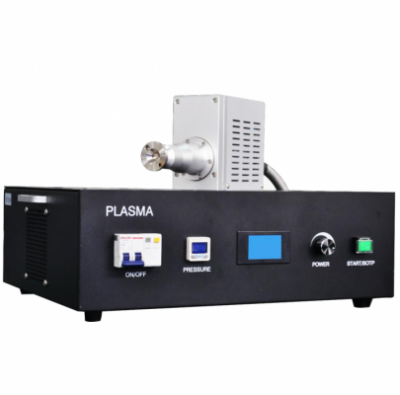
Плазма усисивач


The LS-D30 series plasma cleaner is positioned as an industrial production-grade low-temperature plasma treatment equipment, widely used in electronics, solar energy, аутомобилске, текстилне, packaging and printing, biomedical, and general industries. Its features include high processing efficiency, excellent repeatability and stability, easy operation, diverse process parameters, and the ability to perform various tasks. It is suitable for cleaning, activation, improving adhesion and bonding strength, and etching processes.
- Опис
- Упит
Опис
Плазма усисивач
И. Plasma Cleaning Principle
Plasma, like solids, liquids, and gases, is a state of matter, also known as the fourth state of matter. The plasma state contains the following substances: electrons in high-speed motion; neutral atoms, molecules, and atomic groups (free radicals) in an activated state; ionized atoms and molecules; and unreacted molecules and atoms, but the matter as a whole remains electrically neutral.
Applying sufficient energy to a gas to ionize it creates a plasma state. Тхе “active” components of plasma include: ions, electrons, active groups, excited-state nuclides (metastable states), photons, итд. Plasma surface treatment instruments utilize the properties of these active components to treat sample surfaces, thereby achieving cleaning, modification, and photoresist ashing.
The energy of particles in plasma is generally about several to tens of electron volts, greater than the bonding energy of polymer materials (several to tens of electron volts), and can completely break the chemical bonds of organic macromolecules to form new bonds; међутим, it is far lower than high-energy radioactive rays, only affecting the material surface and not the properties of the substrate. In low-temperature plasma, which is in a non-thermodynamic equilibrium state, electrons possess high energy, enabling them to break chemical bonds in material surface molecules and increase the chemical reactivity of particles (greater than in thermal plasma). Meanwhile, the temperature of neutral particles is close to room temperature. These advantages provide suitable conditions for surface modification of thermosensitive polymers. Through low-temperature plasma surface treatment, various physical and chemical changes occur on the material surface, such as etching and roughening, forming a dense cross-linked layer, or introducing oxygen-containing polar groups, thereby improving hydrophilicity, адхезија, dyeability, biocompatibility, and electrical properties. Under suitable process conditions, surface treatment significantly alters the material’s morphology, introducing various oxygen-containing groups and transforming the surface from non-polar and poorly adhesive to having some polarity, good adhesion, and hydrophilicity, which is beneficial for bonding, премазивање, и штампање. Applying AC high-frequency high voltage across the electrodes causes gas arc discharge in the air between the electrodes, forming a plasma region. Electrons continuously collide with gas molecules during their movement, generating a large number of new electrons. When these electrons reach the anode, they accumulate on the dielectric surface, thus modifying the surface.
In a vacuum chamber, a high-energy, disordered plasma is generated under certain pressure using a radio frequency power supply. This plasma bombards the surface of the product being cleaned, achieving the cleaning purpose.
ИИ. Advantages of Plasma Treatment
Compared to traditional processes, plasma surface treatment technology has the following advantages:
[Powerful Functions]: The modification occurs only on the material surface (approximately a few to tens of nanometers), imparting one or more new functions without altering the inherent properties of the substrate;
[Wide Applicability]: It can treat various substrate types, such as metals, пластика, стакло, and polymer materials;
[Easy Operation]: The process is simple, једноставан за руковање, and offers strong production control and stability;
[High Efficiency]: Short processing time, high reaction rate, and good processing uniformity;
[Energy Saving and Environmental Protection]: The entire process is dry, consuming no water resources, requiring no chemical additives, and generating no pollution.
ИИИ. Представљање производа
The LS-D30 series plasma cleaner is positioned as an industrial production-grade low-temperature plasma treatment equipment, widely used in electronics, solar energy, аутомобилске, текстилне, packaging and printing, biomedical, and general industries. Its features include high processing efficiency, excellent repeatability and stability, easy operation, diverse process parameters, and the ability to perform various tasks. It is suitable for cleaning, activation, improving adhesion and bonding strength, and etching processes. у наставку, professional, ефикасан, and stable solutions can be tailored to meet the specific needs of different customers, perfectly matching the medium to large-scale production requirements of enterprises and companies.
Плазма усисивач
Тецхницал Параметерс
| Назив производа | Плазма усисивач |
| Модел производа | LS-D30 |
| Контролни систем | ПЛЦ + Екран на додир |
| Power Frequency | 13.56 MHz |
| Напајање | АЦ380В (±10В) |
| Power Power | 500В (Подесиво) |
| Gas Channels | 2-channel proportional valve flow control |
| Process Control | Automatic and Manual Modes |
| Internal Cavity Dimensions | 350×320×320mm |
| Internal Cavity Material | 304 нерђајући челик, Aluminum Alloy (Опционо) |
| Loading Dimensions | W300*D265mm, 5 layers total |
| Спољне димензије | 870×740×1540 mm (Length×Depth×Height) |
| Cavity Volume | 30Л |
| Vacuum Degree | 10-30Па |
| Gases Acceptable | Аргон, Кисеоник, Азот, Air, Водоник + Азот (Mixed Gas), итд. |
В.. Main Equipment Configuration List
Plasma Cleaner Main Unit
Vacuum Pump System and Related Accessories
Упутство за употребу, Гарантни картон, Сертификат о усаглашености, итд.