
How to use Leeb hardness tester correctly
In order to ensure that the use of Leeb hardness tester is correct and avoid disputes caused by hardness test data, some key principles for the correct use of Leeb hardness tester are shared to promote the correct understanding and application of hardness measurement in the industry.
First, the unified use of Leeb hardness value for comparison
When using the Leeb hardness tester to test the hardness of the workpiece, the Leeb hardness value should be used uniformly for comparison. Although the national standard GB/T17394 has been promulgated in 1998, there are still enterprises in the process drawings using the traditional hardness labeling method, resulting in data confusion. To ensure accuracy, it is recommended that companies use the same Leeb hardness value for comparison to avoid data differences due to the use of different hardness tester models and standards.
How to use Leeb hardness tester correctly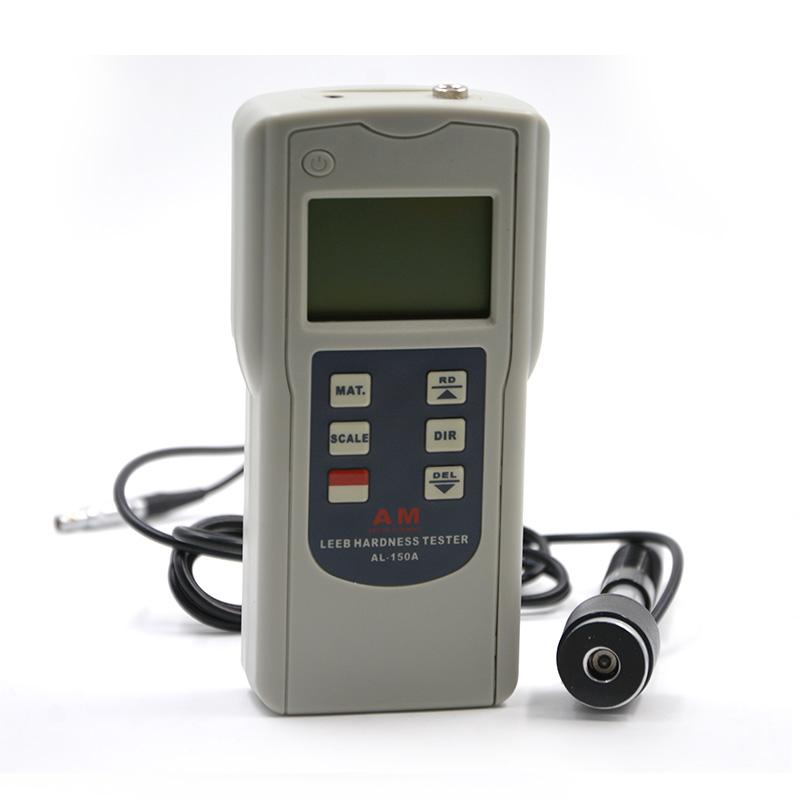
2. Correctly select parameters related to the converted value
At present, the Leeb hardness tester sold and produced in China has an automatic conversion function, and the converted hardness value displayed is determined by the two parameters of the impact device type and the material to be measured. Different types of impact devices will lead to different hardness values, so the selection of impact devices should be strictly in accordance with the provisions of GB/T17394 to ensure the accuracy of the measurement results. In addition, for materials with different modulus of elasticity, it is necessary to pay attention to the adjustment of conversion values to obtain more accurate hardness results.
3, reasonable treatment of samples
The treatment of the sample is directly related to the accuracy and repeatability of the hardness value measured. Before the test, the surface of the sample should be properly treated to remove the oxide layer and expose the metallic luster of the test surface. In addition, samples of smaller mass and thinner thickness should be treated in accordance with the provisions of GB/T17394 to prevent low hardness values due to sample movement and deformation.
How to use Leeb hardness tester correctly
4. Use standard Leeb hardness blocks for calibration
Before each test, the user should calibrate the Leeb hardness tester to ensure the accuracy of the tester. Standard Leeb hardness block is the standard of Leeb hard measurement. Regular calibration can improve the measurement accuracy of the hardness tester and ensure the reliability of the test results.
In view of the above principles, the correct use of Leeb hardness tester requires the comparison of standards, the selection of appropriate parameters, the reasonable handling of samples, and calibration before each test to ensure the accuracy and reliability of the measurement results. Only on the basis of correct use of Leeb hardness tester, can we avoid hardness data disputes caused by the use of different hardness tester and standards, and provide reliable hardness testing support for engineering practice.