
Viscosity coefficient and surface tension
Viscosity coefficient and surface tension are two important parameters of liquid properties, which describe the behavior and characteristics of liquid under different conditions.
Viscosity coefficient and surface tension
Viscosity coefficient: Viscosity coefficient is a physical quantity that describes the viscosity resistance inside a liquid and measures the viscosity or fluidity of a liquid. The higher the coefficient of viscosity, the thicker the liquid, and the more difficult it is to flow. The coefficient of viscosity is usually expressed as the ratio of force per unit area to velocity difference per unit time (อัตราเฉือน). หน่วยมักจะเป็นวินาที Pascal (ปา·ส) หรือมิลลิป้าวินาที (mPa·s). High viscosity liquids (เช่น., colloid, แปะ) have larger viscosity coefficients, while low viscosity liquids (เช่น., น้ำ, แอลกอฮอล์) have smaller viscosity coefficients.
แรงตึงผิว: Surface tension is the property of the liquid surface to contract due to the intermolecular interaction occurring on the liquid surface. Surface tension causes the liquid surface to show as little surface area as possible, forming an elastic film against the outside world. Surface tension has an important effect on the stability of liquid surface and the shape of droplet. Surface tension is usually expressed as a force per unit length, in Newtons per meter (N/ม) or Dyne per centimeter (dyn/cm).
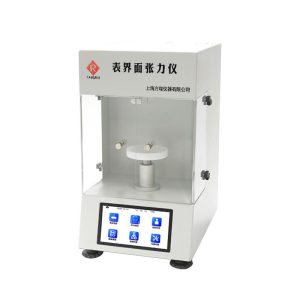
There is no direct mathematical relationship between viscosity coefficient and surface tension. They are different aspects of describing the properties of a liquid. อย่างไรก็ตาม, they are all affected by the interactions between liquid molecules. ตัวอย่างเช่น, ของเหลวที่มีแรงดึงดูดระหว่างโมเลกุลสูงมักจะมีความหนืดสูงกว่าและมีแรงตึงผิวสูงกว่า. อย่างไรก็ตาม, องค์ประกอบของของเหลว, อุณหภูมิ, ความดัน, และเงื่อนไขอื่นๆ อาจส่งผลต่อค่าสัมประสิทธิ์ความหนืดและแรงตึงผิว, ดังนั้นจึงจำเป็นต้องกำหนดค่าและแนวโน้มเฉพาะตามระบบและเงื่อนไขของของเหลวโดยเฉพาะ.