
ความแตกต่างระหว่างแรงตึงผิวและมุมสัมผัส
แรงตึงผิวและมุมสัมผัสเป็นปริมาณที่อธิบายคุณสมบัติของของเหลวบนพื้นผิวของแข็ง, แต่มีความแตกต่างบางอย่างระหว่างพวกเขา.
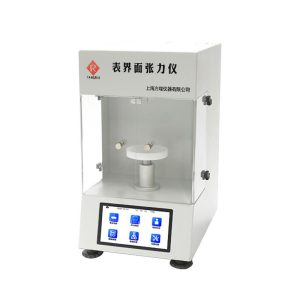
แรงตึงผิวหมายถึงปฏิกิริยาระหว่างโมเลกุลบนพื้นผิวของของเหลว. แรงเหล่านี้ช่วยให้โมเลกุลบนพื้นผิวสร้างชั้นที่ยึดติดแน่นบนพื้นผิวได้, ทำให้พื้นผิวของของเหลวกลายเป็นส่วนต่อประสานที่ค่อนข้างเสถียร. The amount of surface tension determines whether the liquid surface can form a concave shape and whether the droplets can maintain their shape on the surface without merging or splitting. Surface tension is usually measured in Newtons per meter (N/ม).
Contact Angle is the Angle between the contact line between liquid and solid and the solid surface. It can be used to describe the wetness of liquid on the solid surface. The smaller the contact Angle, the better the wetting of the liquid on the solid surface, and the droplet can expand on the surface. When the contact Angle is greater than 90 องศา, the liquid cannot expand on the solid surface, forming a droplet shape. ดังนั้น, the contact Angle can be used to evaluate the hydrophilicity or hydrophobicity of the coating surface. Contact Angle is measured in degrees (°).
นอกจากนี้, surface tension and contact Angle are applied and measured differently.
Surface tension can be used in the formation and stabilization of droplets and foams, wettability of liquids and separation techniques. The contact Angle can be used to evaluate the hydrophilicity or hydrophobicity of the material surface, the wettability of coatings and inks, as well as surface cleaning and surface modification.
ความแตกต่างระหว่างแรงตึงผิวและมุมสัมผัส
Surface tension can be measured by suspension drop method, balance method, reflux method and other methods, while contact Angle can be measured by automatic contact Angle instrument or manual measuring instrument. ในการนำไปปฏิบัติจริง, these measurement methods need to be selected according to the needs of specific application field.
ในระยะสั้น, แรงตึงผิวและมุมสัมผัสเป็นทั้งปริมาณทางกายภาพที่อธิบายคุณสมบัติของของเหลวบนพื้นผิวของแข็ง, แต่แรงตึงผิวอธิบายปฏิสัมพันธ์ระหว่างโมเลกุลบนพื้นผิวของเหลว, ในขณะที่มุมสัมผัสอธิบายมุมระหว่างเส้นสัมผัสระหว่างของเหลวกับของแข็งและพื้นผิวแข็ง. คุณสมบัติและการใช้งานต่างกัน, แต่มีการใช้กันอย่างแพร่หลายและศึกษาในอุตสาหกรรมและวิทยาศาสตร์.