
Principi dell'analizzatore di conducibilità
Un analizzatore di conducibilità elettrica è uno strumento utilizzato per misurare la conduttività elettrica della soluzione. Funziona secondo il principio della conduttività degli ioni in soluzione.
Il principio fondamentale:
Principio di conduzione: Gli ioni presenti in una soluzione hanno carica elettrica e sono in grado di muoversi in un campo elettrico. Quando viene applicato un campo elettrico, gli ioni vengono spostati dalla forza del campo elettrico. Su una determinata distanza, the speed at which an ion moves is proportional to its charge and the strength of its electric field. There are more ions in the solution with higher concentration or higher conductivity, and the ions move faster.
Conductivity definition: Conductivity is an indicator that describes the ability of a solution to conduct electricity. It is defined as the current flow per unit length through a unit cross-sectional area. The electrical conductivity (κ) can be calculated according to the following formula: κ = G × (1/l), where G is the conductivity and represents the current passed per unit length; l is the distance through which the current travels.
Principi dell'analizzatore di conducibilità
Conductivity measurement: Conductivity analyzers use sensors (conductivity electrodes) to introduce an electric current into a solution and measure the strength of the current passing through the solution. According to the definition of conductivity, the instrument can calculate the conductivity value based on the measured current and the distance between the electrodes.
Temperature compensation: Conductivity is closely related to temperature because the conductivity of a solution is affected by temperature. Generalmente, the conductivity increases with the increase of temperature. Perciò, temperature compensation is usually required in conductivity measurement. Conductivity analyzers are usually equipped with a temperature sensor and use a temperature compensation algorithm to correct the measurement results.
Calibration and unit selection: In order to ensure accurate measurement results, conductivity analyzers often need to be calibrated. The calibration process involves calibration using a standard solution with known electrical conductivity to adjust the measurement value of the instrument. Inoltre, the conductivity analyzer also provides the ability to select different units of conductivity, such as S/cm, mS/cm, μS/cm, eccetera.
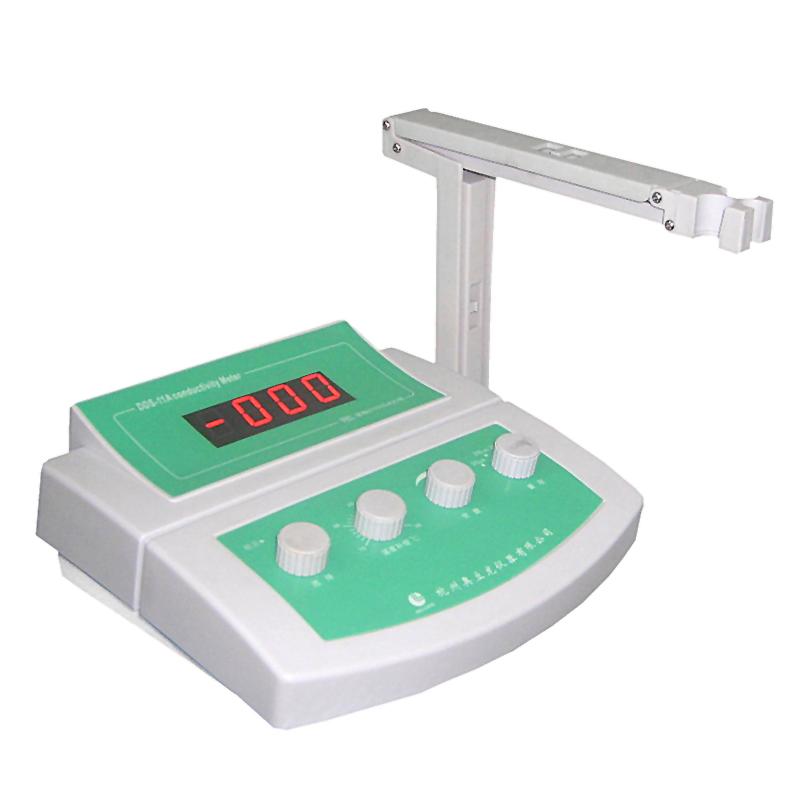
Principi dell'analizzatore di conducibilità
In breve, an conductivity analyzer evaluates the concentration and conductivity of ions in a solution by measuring the conductivity in the solution. It uses an electric field to drive ions in a solution and measures the strength of the current passing through the solution to calculate the conductivity value. Through temperature compensation and calibration, è possibile ottenere misurazioni accurate della conducibilità.