
Covering power/opacity measurement
Masking power, also known as masking power or opacity, fait référence à la capacité d'un revêtement ou d'une peinture à cacher ou recouvrir complètement la surface sous-jacente, empêchant la couleur ou la texture du substrat de transparaître. Il s'agit d'une mesure de l'efficacité avec laquelle un revêtement ou une peinture peut “couverture” la surface sur laquelle il est appliqué, cacher les imperfections ou les couleurs en dessous.
The covering power of a coating is affected by several factors, y compris le type et la composition du revêtement, la couleur et la texture du support, l'épaisseur du revêtement, et la méthode d'application. Un revêtement à haut pouvoir couvrant fournira un solide, uniform and opaque appearance with minimal or no visible traces of the substrate or underlying color.
Hiding power is an important feature in a variety of applications where the goal is to achieve a uniform and consistent appearance, such as in wall coatings, automotive coatings and other industrial coatings. Coatings with good hiding power help hide surface defects, fournir des tons uniformes, et créez une finition visuellement agréable et professionnelle.
Covering power/opacity measurement
Le pouvoir couvrant du revêtement est généralement évalué expérimentalement à l'aide de méthodes de test standard., which may involve measuring the reflectivity or transmittance of light through the coating and substrate, or visually evaluating the opacity and appearance of the coating surface. Différents revêtements et peintures peuvent avoir des caractéristiques de capacité de couverture différentes en fonction de leur formulation., et constituent souvent une considération importante lors du choix d'un revêtement pour une application particulière..
There are several methods you can use to test the hiding power or opacity of a coating or paint. Voici quelques méthodes courantes:
Évaluation visuelle: A simple method is to visually evaluate the appearance of the coated surface. Cela peut être fait en appliquant le revêtement sur un substrat de couleur et de texture connues., et comparer la zone enduite à la zone non enduite. If the coating completely hides the substrate color and texture and provides a uniform, aspect opaque, it is considered to have good coverage.
Mesure du contraste: This method involves measuring the reflectivity or transmission of light through a coated surface and comparing it to an uncoated surface or a standard reference. Un contraste plus élevé, C'est, the ratio of the reflectivity or transmittance of the coated surface to the uncoated surface, indique une capacité de couverture plus élevée. Cette méthode peut être réalisée à l'aide d'un spectrophotomètre ou d'un colorimètre, suivant les méthodes de test standard telles que ASTM D2805 pour la mesure du contraste.
Covering power/opacity measurement
Covering power/opacity measurement
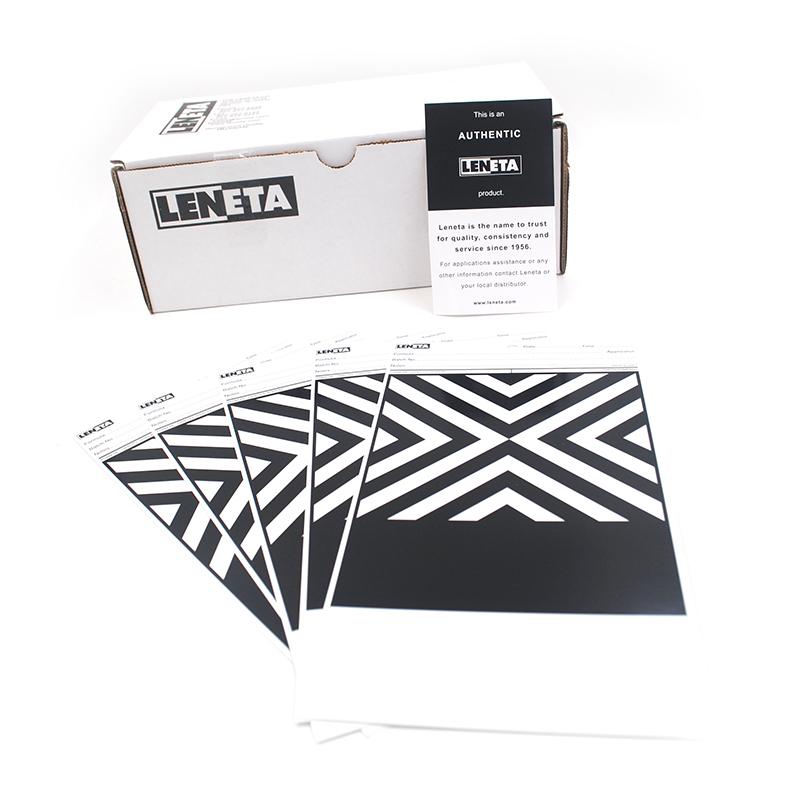
Mesure de puissance de couverture: This method measures the ability of the coating to cover a black and white pattern printed on the substrate or a series of lines of known width and line spacing, comparing the coating substrate to a set of reference standards for known covering power to determine the minimum coating thickness required to completely cover the pattern or line. ASTM D344 ou ISO 6504 are commonly used standards for covering power measurement.
Mesure de diffusion ou d'obscurité: This method involves the use of a specialized instrument, comme un diffusomètre ou un obscurcomètre, to measure the scattering or diffusion of light on a coated surface. The amount of scattering or diffusion is related to the coating’s covering ability, and higher scattering indicates higher covering ability. This method is more complex and is often used in research or quality control Settings.
The specific test method chosen may depend on the type of coating, application prévue, et les normes ou exigences de l'industrie ou des applications. Il est recommandé de consulter les normes pertinentes, lignes directrices, or industry practices for appropriate testing procedures for the specific coating or paint being evaluated.