
Coating surface glossiness determination and glossometer determination method
introduction
In the coatings industry and related fields, the surface gloss of coatings is a very important quality characteristic. Gloss reflects the smoothness and reflective ability of the coating surface, and different application scenarios require different gloss degrees of paint. Afin de garantir la qualité du revêtement, il est nécessaire de mesurer le brillant de surface du revêtement. Cet article décrit comment utiliser un brillancemètre pour mesurer la brillance de la surface d'un revêtement., y compris la plage de mesure, les instruments et le matériel requis, the measurement method, la représentation du résultat, et la norme de référence.
1. Portée et description
Surface gloss is a characteristic of the surface of an object, which reflects the ability of the surface to reflect light. Coatings are divided into different gloss grades, including light, semi-light and no light, and their gloss value is usually expressed by gloss unit (GU). The gloss value of light paint is higher than 40 GU, the gloss value of semi-light paint is between 20 GU and 40 GU, and the gloss value of matt paint is lower than 10 GU. These gloss grades are divided according to the different gloss needs of the coating in practical applications.
This method is suitable for the determination of surface gloss of colored paints, but not for colored paints containing metallic pigments. The measurement principle is to use the gloss meter, according to the light reflection principle, the gloss of the sample is compared with the gloss standard plate, so as to obtain the surface gloss value of the coating.
Coating surface glossiness determination and glossometer determination method
2. Instruments et matériaux
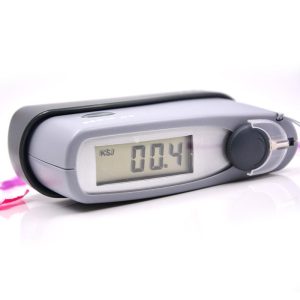
(1) Gloss meter: The gloss meter is composed of a light source part and a receiving part. After the light emitted by the light source is treated by the lens, it shines on the coating surface at a certain Angle, and then receives the reflected light collected by the part and converts it into the gloss value by the photocell. Glossometers usually have different geometric angles, including 20°, 60°, et 85°.
(2) Standard plate: Standard plate usually includes two kinds of high gloss and low gloss. High gloss standard plate A highly polished black glass plate or a clear glass plate with black paint is used to calibrate the gloss meter. The low-gloss standard plate is mainly used to check whether the instrument is working normally and cannot be used for calibration.
3. Méthode de détermination
Before taking the measurement, the gloss meter needs to be calibrated, and then the coating surface gloss is measured according to the following steps:
Calibrate the gloss meter to ensure proper operation of the instrument.
Place the gloss meter on the surface of the sample and select the appropriate measurement Angle (20°, 60° or 85°) au besoin.
Trois lectures sont mesurées à différents endroits et leur valeur moyenne est enregistrée comme valeur de brillance de surface de l'échantillon.
Coating surface glossiness determination and glossometer determination method
4. Présentation des résultats
La valeur de brillance de la surface est exprimée en unité de brillance (GU). Selon l'angle utilisé dans la mesure, la valeur de brillance sous différents angles peut être obtenue.
5. Normes de référence
Norme nationale GB/T 9754 “Peinture et vernis de couleur sans pigments métalliques – détermination de 20°, 60° et 85° brillant miroir du film de peinture couleur”.
conclusion
Le brillant de surface du revêtement est un paramètre important pour évaluer sa qualité et son applicabilité.. En utilisant un brillancemètre, le brillant de surface du revêtement peut être mesuré avec précision et comparé à la norme pour garantir que le revêtement répond aux exigences de brillance souhaitées. Les données de brillance sont importantes pour la production et l'application de revêtements, ils aident les fabricants et les utilisateurs à évaluer les performances et la qualité d'aspect des revêtements. Par conséquent, dans l'industrie des revêtements, la mesure de la brillance de la surface est une étape indispensable du contrôle qualité, contribuant à garantir la cohérence et la fiabilité des revêtements.